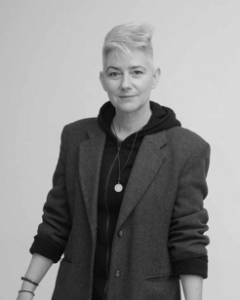
Professor Vanessa Agnew
Position: Visiting Fellow
School and/or Centres: Humanities Research Centre
At ANU: 22 Aug 2024 - 05 Sep 2024
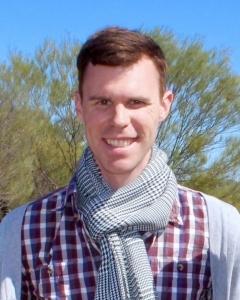
Dr James Bednall
Position: Visiting Fellow
School and/or Centres: Humanities Research Centre
At ANU: 11 Nov 2024 - 14 Dec 2024
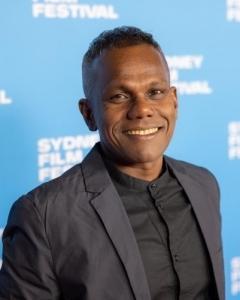
Dr Visakesa Chandrasekaram
Position: Visiting Fellow : 2024 SSSHARC/HRC Fellow in Creative Practice
School and/or Centres: Humanities Research Centre
At ANU: 02 Aug 2024 - 02 Aug 2024
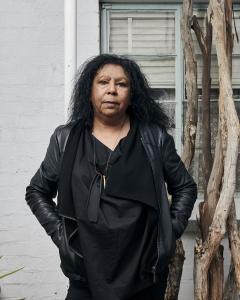
Ms Maree Clarke
Position: Visiting Fellow
School and/or Centres: Humanities Research Centre
At ANU: 04 Jun 2024 - 30 Jul 2024
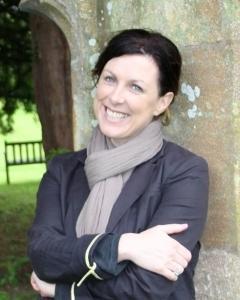
Professor Sharon Crozier-De Rosa
Position: Visiting Fellow
School and/or Centres: Humanities Research Centre
At ANU: 02 May 2024 - 16 Jun 2024
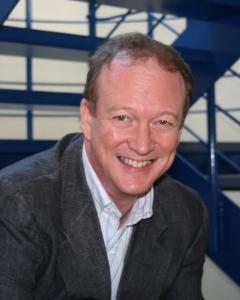
Mr Geraint Evans
Position: Visiting Fellow
School and/or Centres: Humanities Research Centre
At ANU: 30 Jul 2024 - 14 Sep 2024

Professor Christopher Ewing
Position: Visiting Fellow: 2024 HRC-Freilich Fellow
School and/or Centres: Humanities Research Centre
At ANU: 18 Nov 2024 - 20 Dec 2024






















































 /
/


 Lorraine Code is Distinguished Research Professor Emerita in Philosophy at York University in Toronto Canada, and a Fellow of the Royal Society of Canada. She is the author of Epistemic Responsibility (1987), and What Can She Know? Feminist Theory and the Construction of Knowledge (1991). In Rhetorical Spaces: Essays on (Gendered) Locations (1995), she addresses incredulity, empathy, relativism, and the epistemic power of gossip. Ecological Thinking: The Politics of Epistemic Location (Oxford University Press 2006) develops an “ecological naturalism”, which looks to ecological science where Quineans look to cognitive science, as a place - literal and metaphorical - where knowledge is “naturally” made.
 Jan Rueger teaches Modern European History at Birkbeck, University of London.
 Clara Tuite is Senior Lecturer in English, University of Melbourne, where she teaches and researches primarily in British Romantic literature and cultural history. She is the author of Romantic Austen: Sexual Politics and the Literary Canon (Cambridge University Press, 2002), and is currently completing a monograph entitled ‘Proverbial Notorious: Lord Byron and the Rites of Scandalous Celebrity’.
 Peter Gratton teaches philosophy at the Memorial University of Newfoundland. He has published numerous articles in political and intercultural philosophy and is the author of The State of Sovereignty: Lessons from the Political Fictions of Modernity (SUNY Press, 2012) and Speculative Realism (Continuum, forthcoming). An executive editor of Radical Philosophy Review, Co-Editor of the journal Society and Space (Environmental Planning D), Peter has also edited two works: Traversing the Imaginary (Northwestern University Press, 2007), co-edited with John Mannousakis, and Jean-Luc Nancy and Plural Thinking: Expositions of World, Politics, Art, and Sense (SUNY Press, 2012), co-edited with Marie-Eve Morin. His focus at the Humanities Research Centre, ANU will be to link current movements in materialism to "ecological enlightenment."
 Vincent Bruyere is an assistant professor in the department of French and Francophone Studies at the Pennsylvania State University. His research interests touch upon problematics of self-formation and cultural identity in the modern research University. He has recently completed a book manuscript on the notion of francophone difference and its impact on French literary history. His new research project examines the cultural dimension of politics of life, especially the formation of medical and environmental humanities.
 Karen Pinkus is Professor of Italian and Comparative Literature at Cornell University where she is also a Faculty Fellow of the Atkinson Center for a Sustainable Future and a member of the climate change focus group. She is the author, recently, of numerous articles on climate change and the humanities. A forthcoming book, The Poetics of Fuels, will address various fuels (as distinct from energy systems)--actually existing and imagined--as potentialities. At Cornell she will co-teach a class with a colleague from Earth and Environmental Sciences on humans and climate change.
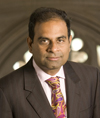 Srinivas Aravamudan was appointed dean of the humanities at Duke in July 2009. At Duke, he is Professor in the Departments of English, Romance Studies, and the Program in Literature. He directed the John Hope Franklin Humanities Institute (2003-2009) and is president of the Consortium of Humanties Centers and Institutes from 2007-2012. He has published Tropicopolitans: Colonialism and Agency, 1688-1804 (1999, Duke University Press) and Guru English: South Asian Religion In a Cosmopolitan Language (2006, Princeton University Press and 2007, Penguin India). His next book, Enlightenment Orientalism: Resisting the Rise of the Novel, will be published by the University of Chicago Press in 2011. Aravamudan has also edited a number of other publications and written a large number of scholarly articles and essays on topics that range from eighteenth-century studies to postcolonial theory, and political philosophy to the theory of fiction. He is currently writing a book on sovereignty and the concept of anachronism.
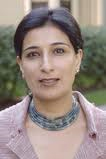 Professor Ranjana Khanna, English & Wom¬en’s Studies, Duke University, USA. Professor Khanna works on Anglo- and Francophone Postcolonial theory and literature, Psychoanalysis, and Feminist theory. She has published articles on transna¬tional feminism, psychoanalysis, autobiography, post¬colonial agency, multiculturalism in an international context, postcolonial Joyce, Area Studies and Women’s Studies, and Algerian film. She is the author of Dark Continents: Psychoanalysis and Colonialism (2003) and Algeria Cuts: Women and Representation 1830 to the present (2008). Her current book project is entitled “Asylum: The Concept and the Practice.”
 Yvette Taylor is Professor in Social and Policy Studies and Head of the Weeks Centre for Social and Policy Research, London South Bank University; the Centre hosts the next Gender and Education Association international conference (2013) titled Compelling Diversities, Educational Intersections: Policy, Practice, Parity. She has held a Fulbright Scholarship at Rutgers University (2010-11). Books include Fitting Into Place? Class and Gender Geographies and Temporalities (Ashgate, 2012); Lesbian and Gay Parenting: Securing Social and Educational Capitals (Palgrave, 2009) and Working-Class Lesbian Life: Classed Outsiders (Palgrave, 2007). Edited collections include Educational Diversity (Palgrave, 2012); Sexualities: Reflections and Futures (2012); Theorizing Intersectionality and Sexuality (Palgrave, 2010) and Classed Intersections: Spaces, Selves, Knowledges (Ashgate, 2010). She has articles in a range of journals including British Journal of the Sociology of Education, European Societies, Sociological Research Online, Sexualities, Feminist Theory and she edited the Special Issue of Sexualities Feb. 2011 (Sexuality and Class). Yvette is currently working on an ESRC standard grant ‘Making space for queer identifying religious youth’ (2011-13) and recently completed an ESRC (2007-2009) funded project ‘From the Coal Face to the Car Park? Intersections of Class and Gender in the North East of England’. She regularly blogs on the British Sociological Association’s (BSA) Sociology and the Cuts and the Gender and Education Association (GEA) websites and is director of the MA Gender and Sexuality at the Weeks Centre. Follow Yvette
  Dr. Adeline Johns-Putra is a Senior Lecturer in English at the University of Exeter. Her research interests lie in environmental criticism, Romanticism and genre. She is the author of two books, Heroes and Housewives: Women's Epic Poetry and Domestic Ideology in the Romantic Age (2001) and The History of the Epic (2006), and editor, with Catherine Brace, of a collection of interdisciplinary essays, Process: Landscape and Text (2010). She is Chair of the Association for the Study of Literature and the Environment (ASLE), UK and Ireland. As part of a major European Social Fund project on imagining climate change, she is completing a monograph, with Adam Trexler, tentatively entitled ‘Anthropocene Fictions: The Novel in a Time of Climate Change’.
 My research spans the entire field of comparative postcolonial literary/cultural studies, and I also have interests in the areas of travel writing, ecocriticism, short fiction, and film. Recent publications include Postcolonial Ecocriticism: Literature, Animals, Environment (co-written with Helen Tiffin, Routledge, 2010), Extreme Pursuits: Travel/Writing in an Age of Globalization (University of Michigan Press, 2009), and a collection of essays, Racism, Postcolonialism, Europe (co-edited with Ian Law, Liverpool University Press, 2009). A revised collection of my own essays, Interdisciplinary Measures, came out in 2008, also with Liverpool University Press. Such work shows my continuing interest in cross-disciplinary approaches to postcolonial studies, as is also confirmed by the book series for which I am the founding co-editor, 'Postcolonialism across the Disciplines' (Liverpool University Press). Current projects include a book on the figure of the 'celebrity conservationist', which is contracted to the major UK-based independent environmental publisher Earthscan, and I also hope to embark soon on a book-length study of postcolonial film. I am sole editor of the 250,000-word Oxford Handbook of Postcolonial Studies (estimated publication date 2013).
 Helen McDonald is an Honorary Fellow in the Art History Program, School of Culture and Communication at the University of Melbourne. She is the author of Erotic Ambiguities: The Female Nude in Art (London & New York: Routledge) 2001 and Patricia Piccinini: Nearly Beloved (Sydney: Piper Press) 2012. Focusing on contemporary and late modernist art, including Australian Aboriginal art, her recent research explores aesthetics of dryness and dry country through the lens of climate change. She posits that an aesthetics of dry country forces acknowledgement of ecological damage in Australia and responsibility for a sustainable future.
 Rachel Sweeney is currently the Acting Head of Dance at Liverpool Hope University, UK where she also runs cross disciplinary research forums between Performing Arts and Environmental Science. Taught specialisms include: dance ethnography, site based choreography, European Dance Theatre history, and sustainable education.
 Ingrid Sykes currently teaches history at La Trobe University, Melbourne. Her first monograph, Women, Science and Sound in Nineteenth-Century France (Frankfurt: Peter Lang, 2007), examined the interrelationship between female performers, technology, and institutional politics in nineteenth-century Paris. She has published articles in French History, the Journal of the History of Medicine and Allied Sciences (co-authored with Penelope Gouk), Medical History and French History and Civilization: Papers from the George Rudé Seminar, and has a forthcoming article in the Journal of Eighteenth-Century Studies. In addition to her interest in cultural and political history, she has also worked in the fields of the history of technology, medicine and science with particular expertise in sound. In 2003, she commenced an Economic and Social Research Council (ESRC) postdoctoral research fellowship at the Department of History, University of Warwick, UK followed by a Wellcome Trust Research Fellowship at the Centre for the History of Medicine at Warwick. She has worked as a member of the research team, ‘Histoire de l’Invention et des Savoirs Techniques’, Centre d’Histoire des Techniques (CDHTE), Conservatoire des Arts et Métiers, Paris, led by Liliane Hilaire-Pérez, and peer-reviewed applications and proposals for the Wellcome Trust, the Arts and Humanities Research Council (AHRC) and Imperial College Press, UK. She has spoken at conferences in the US (American Association of the History of Medicine, 2010), the UK (‘Mastering the Emotions’, Centre for the History of Emotions, Queen Mary, University of London, 2011) and France (Département d’Etudes Cognitives, Ecole Normale Supérieure and the Laboratoire de Psychologie de la Perception, CNRS, Université Paris Descartes, 2008). In 2009, she brought together historians, musicologists and auditory neuroscientists from the US, UK and France for an international symposium, “Signalling Sound”, at the Arden Conference Centre, University of Warwick. She is currently working on a book, The Humanity of Hearing in Modern Europe. It has a particular focus on the relationship between the human ear, the natural environment and political ideology in the European Enlightenment.
 Richard H. King is Professor (Emeritus) in American Studies at University of Nottingham, UK. His special area of interest is intellectual history--of the US, Europe and the Black Atlantic. His particular interests focus on political thought and critiques of race and racism,along with the exploration of the cross-cultural and transnational movement of ideas and systems of thought. Most recently he has authored Race, Culture and the Intellectuals, 1940-1970 (2004)and co-edited Hannah Arendt and the Uses of History (2007) with Professor Dan Stone. He is presently working on a project, The American Arendt, that will assess Arendt's influence on American thought and culture--and the latter's influence on her thought.
 Stuart Elden is a Professor of Political Geography at Durham University, and the editor of the journal Society and Space. He is the author of four books, including most recently, Terror and Territory: The Spatial Extent of Sovereignty (University of Minnesota Press, 2009). He is currently completing a history of the concept of territory, and while at ANU will begin a book thinking the relation between philosophy, globalisation and territory, tentatively entitled The Space of the World.


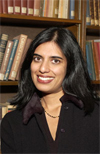 Associate Professor Cooppan teaches literature at the University of California at Santa Cruz. Her essays on postcolonial and world literatures, globalization theory, psychoanalysis, and nationalism have appeared in Symploke, Comparative Literature Studies, and several published and forthcoming edited volumes. She is the author of Worlds Within: National Narratives and Global Connections in Postcolonial Writing (2009).
 Giorgio Riello is Associate Professor in Global History and Culture at the University of Warwick, UK and taught previously at the London School of Economics (2004-06) and the Royal College of Art/ Victoria and Albert Museum (2003-04). He completed his PhD in History at University College London in 2002 and has a degree in Business Studies from the University of Venice, Ca’ Foscari.
 Matthew Potter researches the history of British visual culture in the period 1850-1950 with particular reference to international exchanges within the British world and the role of foreign nations in the creation of various British national identities.
 Thomas McLean is a lecturer in nineteenth-century British and American literature at the University of Otago in New Zealand. He is the editor of Further Letters of Joanna Baillie (Fairleigh Dickinson University Press, 2010) and is currently completing The Other East and Nineteenth-Century British Literature: Imagining Poland and the Russian Empire (under contract with Palgrave Macmillan for 2011). His articles have appeared in The Wordsworth Circle, Keats-Shelley Journal, Victorian Poetry, and Journal for Early Modern Cultural Studies. While at the Humanities Research Centre, he will be working on a critical biography of the nineteenth-century British novelists Jane and Anna Maria Porter and their brother, the artist, traveler and diplomat Sir Robert Ker Porter.

 Shirley Jennifer Lim is Associate Professor of History and affiliate faculty in Women’s Studies, Africana Studies, and Cinema and Cultural Studies at the State University of New York at Stony Brook. The author of A Feeling of Belonging: Asian American Women’s Public Culture, 1930-1960 (NYU 2006), she is currently working on a book-length manuscript entitled “Performing the Modern: Anna May Wong and Josephine Baker.”
 Matthew Christensen is currently an assistant professor of English at the University of Texas-Pan American, located on the U.S.-Mexico border, where teaches African, postcolonial, and comparative world literature. He is completing his first book, Rebellious Histories: The Amistad Slave Rebellion, Black Transnationalism, and Modernity in Sierra Leone and the United States, which examines the cultural afterlives of the 1839 shipboard rebellion as it has been deployed to confront the legacies of Atlantic capitalism.
 Diana Brydon is Canada Research Chair in Globalization and Cultural Studies and Director of the Centre for Globalization and Cultural Studies at the University of Manitoba. She has published books on Christina Stead and Timothy Findley, edited Postcolonialism: Critical Concepts in Literary and Cultural Studies and co-edited Shakespeare in Canada and Renegotiating Community: Interdisciplinary Perspectives, Global Contexts. She currently serves as a member of the international convening group for a project on “Building Global Democracy” (
 Wendy Webster’s current project on Englishness and Europe has been supported by a Leverhulme Research Fellowship.
 Jackie Menzies, a graduate of the University of Sydney, has been responsible for the development of the Asian collections at the Art Gallery of New South Wales since her appointment in 1980. She has been responsible for many publications relating to the collections, and overseen two expansions of the Asian galleries (one in 1990; then most recently the upstairs Asian ‘pavilion’ in 2003). The 352 page book 'The Asian Collections' (2003), edited by her, was awarded 'Best Book of the Year' 2003 by the Power Institute and the Association of Art Historians of Australia and New Zealand. Ms Menzies has been the recipient of many grants, including two Australian Research Council (ARC) Linkage grants: one with the University of Sydney, another with the University of Western Sydney, and an AMCAI (Art Museum Collections Accessibility Initiative) grant from the Ian Potter Foundation (2001-2003) to research audience development.
 Paula Hamilton is Associate Professor of History at the University of Technology in Sydney. Her specialist areas of research include cultural history and memory studies, especially individual and public memory; oral history and biography. She is also the Director of the Australian Centre for Public History and has worked in a range of projects with museums, heritage agencies and community organisations. Her most recent publications are (co-edited with Linda Shopes) Oral History and Public Memories, Temple University Press, 2008 and (with Paul Ashton) the forthcoming History at the Crossroads: Australians and the Past, to be published by Halstead press in 2010.
 Stephen Clancy is Professor and Chair of the Art History department at Ithaca College in Ithaca, New York. He began his professional life as a lawyer, before deciding to hang up his “law suits” to don the robes of academia. Professor Clancy teaches the history of Ancient, Medieval, and Northern Renaissance art and architecture, as well as general courses on visual culture and the rhetoric of images. Professor Clancy has published and presented extensively on the French fifteenth-century artist Jean Fouquet, Middle Byzantine ivory carving, and the northern French illuminator and panel painter Simon Marmion; his work on Marmion was supported by Fulbright Scholar and American Philosophical Society Awards in Belgium in 1995-96. His interest in infusing technology into the humanities led him to develop an interactive architectural visualization project entitled "The Virtual Chartres Cathedral" (
 Luke Gartlan is Lecturer in the School of Art History at the University of St Andrews, Scotland, where he teaches modules on the history of photography and colonial-era visual culture. He has held research fellowships at the University of Vienna (2004-05) and Nihon University, Tokyo (2005-07), and has contributed catalogue essays for the National Gallery of Victoria and the Tokyo Metropolitan Museum of Photography. Luke has published articles in Visual Resources, Early Popular Visual Culture, and The La Trobe Journal, and recently guest edited a special issue on photography in nineteenth-century Japan for History of Photography (May 2009). Currently he is working on a monograph on the aristocratic photographer Baron Raimund von Stillfried and his role as a cultural mediator and interpreter of Japanese culture. For more information see
  Karen Greene holds an MA from the University of California, Berkeley in Folklore and a Ph.D. from the University of California, Berkeley/UCSF in Medical Anthropology. Her Master's thesis explored the transnational circulation and transformation of familiar courtship themes in the narratives of Cambodian refugee parents using films and tales to teach their daughters to be good Cambodian women, and in the daughters' self-making efforts to be both good Cambodians and good Americans. Karen's doctoral work followed the transformation of ethical discourse in the opposite directions. She interrogated human rights pedagogy, the transformation of ways of caring and the making of Cambodian young people into children-with-rights. Questions of governance, personhood, the vibrancy of young people, and the ontological stakes in the circulation of persons, ideas, and things drive her work, and shape in her research questions.
 Hollis Clayson (Ph.D., Art History, University of California at Los Angeles) is Bergen Evans Professor in the Humanities and Director of the Alice Kaplan Institute for the Humanities at Northwestern University (Evanston, Illinois, USA). She has been the recipient of many research fellowships and teaching awards, and her publications include Painted Love: Prostitution in French Art of the Impressionist Era (1991 and 2003) and Paris in Despair: Art and Everyday Life Under Siege (1870-71) (2002). Her current book-in-progress is Electric Paris: The City of Light in the Visual Cultures of the Transatlantic (1870-1914).
  Lisanne Gibson is a lecturer in the Department of Museum Studies at the University of Leicester. She writes on a range of cultural policy issues including the history of museums, public art, cultural heritage, cultural value, cultural industries, and cultural development. She has published three books: Valuing Historic Environments (Ashgate, 2009, co-edited with JohnPendlebury); Monumental Queensland: Signposts on a Cultural Landscape, (University of Queensland Press, 2004, co-authored with Joanna Besley); and, The Uses of Art: Constructing Australian Identities (University of Queensland Press, 2001). Lisanne has also co-edited special journal issues on culture-led regeneration- International Journal of Cultural Policy (2004), and, on cultural industries and cultural development- Media International Australia (2004 and 2002). Lisanne is currently working on a monograph Museums and the Politics of Urban Redevelopment. The overarching argument of Lisanne’s work is that cultural management and funding must be clear-eyed about not only its economic or cultural effects but also its social and political effects. For further biographical information and a full publication list see
  Petra Kuppers is the Artistic Director of The Olimpias (